
There’s something truly comforting about a Japanese Beef Rice Bowl, especially after a long day. The moment the thinly sliced rib eye hits the hot skillet, the sound of sizzling beckons you into the kitchen with promises of warmth and flavor. As the aroma of savory beef mingling with sweet mirin and umami-filled soy sauce fills the air, it feels like a warm hug for the soul.
I discovered this delightful dish during a cozy dinner at home, a last-minute solution to my “what’s for dinner?” dilemma. With just a handful of simple ingredients, you can whip up a satisfying meal that transforms the mundane into something special. Whether served with a perfectly poached egg or garnished with crunchy green onions, this Beef Rice Bowl is not just a feast for the stomach; it’s an experience to cherish.
Join me as we explore how to create this easy-to-make, crowd-pleasing recipe that promises to reignite your love for home-cooked meals. Let’s dive in!
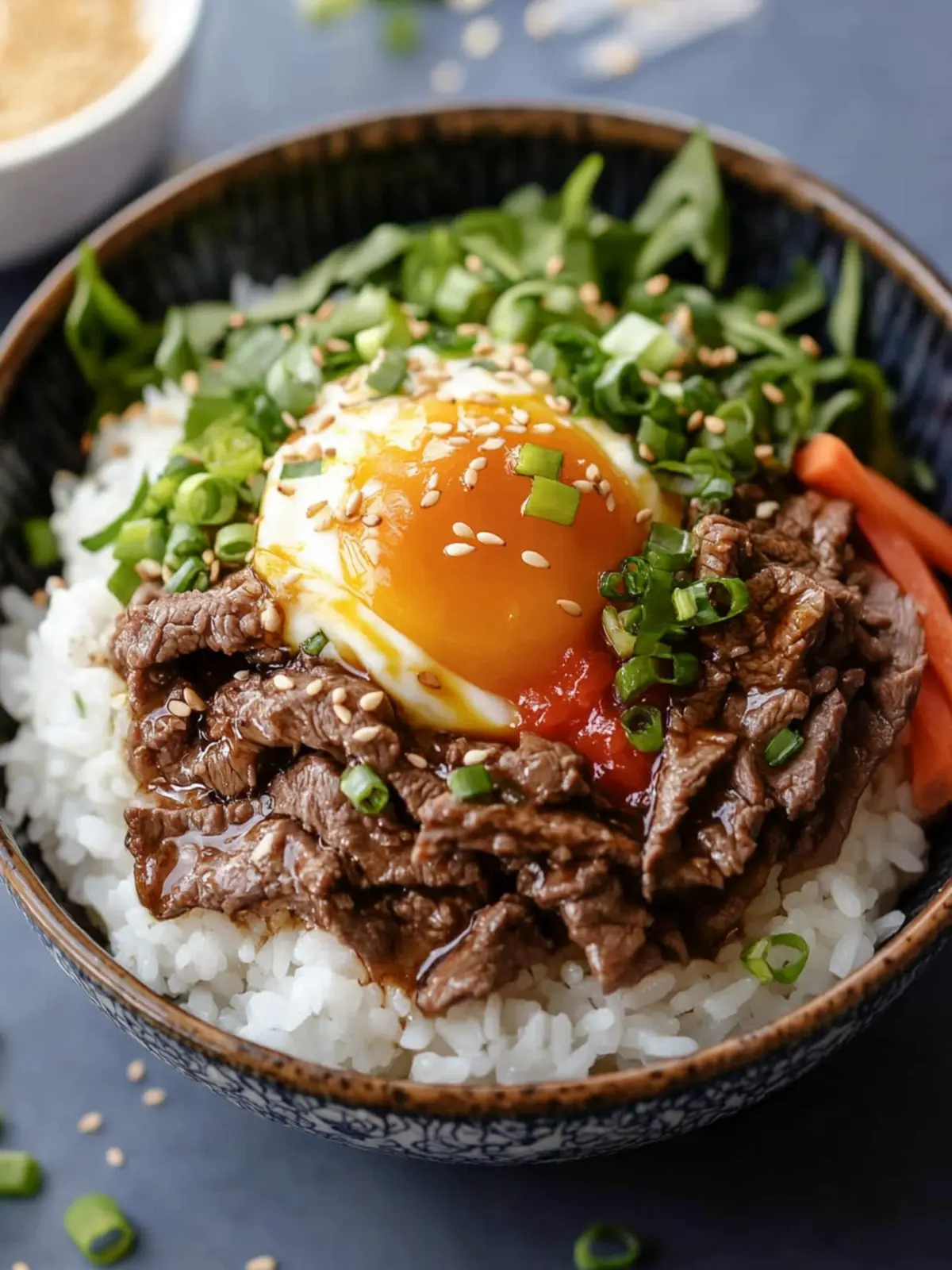
Why will you love this Japanese Beef Rice Bowl?
Simplicity at its finest: This recipe utilizes common ingredients easily found in your pantry and requires minimal cooking skills, making it accessible for everyone.
Rich, comforting flavors: The harmony of rib eye beef, mirin, and soy sauce creates an irresistible umami-rich blend that will leave you wanting more.
Customizable options: Tailor your rice bowl with optional garnishes like green onions and onsen tamagos, allowing you to make each bowl unique.
Perfect weeknight meal: Quick to prepare and perfect for busy evenings, it transforms everyday ingredients into a delectable feast.
Crowd-pleaser: Serve this dish at gatherings or family dinners, and watch it disappear in no time!
For more unique takes on rice bowls, check out our delightful Rice Bowl Variations.
Japanese Beef Rice Bowl Ingredients
• Discover the essential components for crafting a delicious Japanese Beef Rice Bowl.
For the Beef
- ½ lb thinly sliced rib eye beef – Choose good quality beef for the best flavor and tenderness.
For the Vegetables
- 1 medium-sized onion, julienned – Sweet onions caramelize beautifully, adding depth to the dish.
For the Rice
- 3 cups cooked short grain rice or jasmine rice – Short grain rice provides the perfect sticky texture to hold all the flavors.
For the Broth
- ½ cup water – Make sure it’s at room temperature for a smooth blend.
- ½ teaspoon hondashi powder – This Japanese dashi adds rich umami flavor to the broth.
- ¼ cup mirin – A touch of sweetness that balances the savory elements.
- 3 tablespoons regular soy sauce or light soy sauce – Use low-sodium soy sauce for a healthier option.
- 3 tablespoons cooking sake or dry sherry/rice vinegar – Adds depth and a hint of acidity to the broth.
- 1 tablespoon white granulated sugar – Helps to mellow the flavors and enhance sweetness.
For the Aromatics
- 2 garlic cloves, minced – Fresh garlic infuses the dish with a wonderful aroma.
- 1 teaspoon ginger, thinly sliced – Adds a zesty kick that complements the beef beautifully.
For the Garnish (Optional)
- 1 green onion, finely chopped – Provides a fresh, crunchy element.
- ½ teaspoon sesame seeds – Toasted seeds add a delightful nutty crunch.
- 2 tablespoons pickled ginger – Offers a tangy contrast to the richness of the beef.
- 2 onsen tamagos or poached eggs – Adds creaminess and elevates this Japanese Beef Rice Bowl experience.
How to Make Japanese Beef Rice Bowl
-
Prepare the beef by ensuring it’s fully thawed and thinly sliced. This will help enhance its tenderness when cooked.
-
Sauté the sliced onions in a skillet over medium heat until they turn translucent, about 3-4 minutes. This step brings out their natural sweetness.
-
Add the rib eye beef to the skillet. Cook until browned, stirring occasionally, about 5 minutes. The beef should be slightly crispy around the edges when done.
-
Mix water, hondashi powder, mirin, soy sauce, cooking sake, sugar, minced garlic, and thinly sliced ginger in a separate bowl. This savory broth is the soul of your Japanese Beef Rice Bowl!
-
Pour the broth over the beef and onions, and let it simmer for 5-7 minutes. Enjoy the scents as the flavors meld together beautifully!
-
Serve the beef mixture generously over cooked rice, ensuring each bowl is hearty and satisfying.
-
Garnish with green onions, sesame seeds, pickled ginger, and onsen tamagos or poached eggs if desired for that perfect finishing touch.
Optional: Drizzle with a bit of extra soy sauce for added flavor.
Exact quantities are listed in the recipe card below.
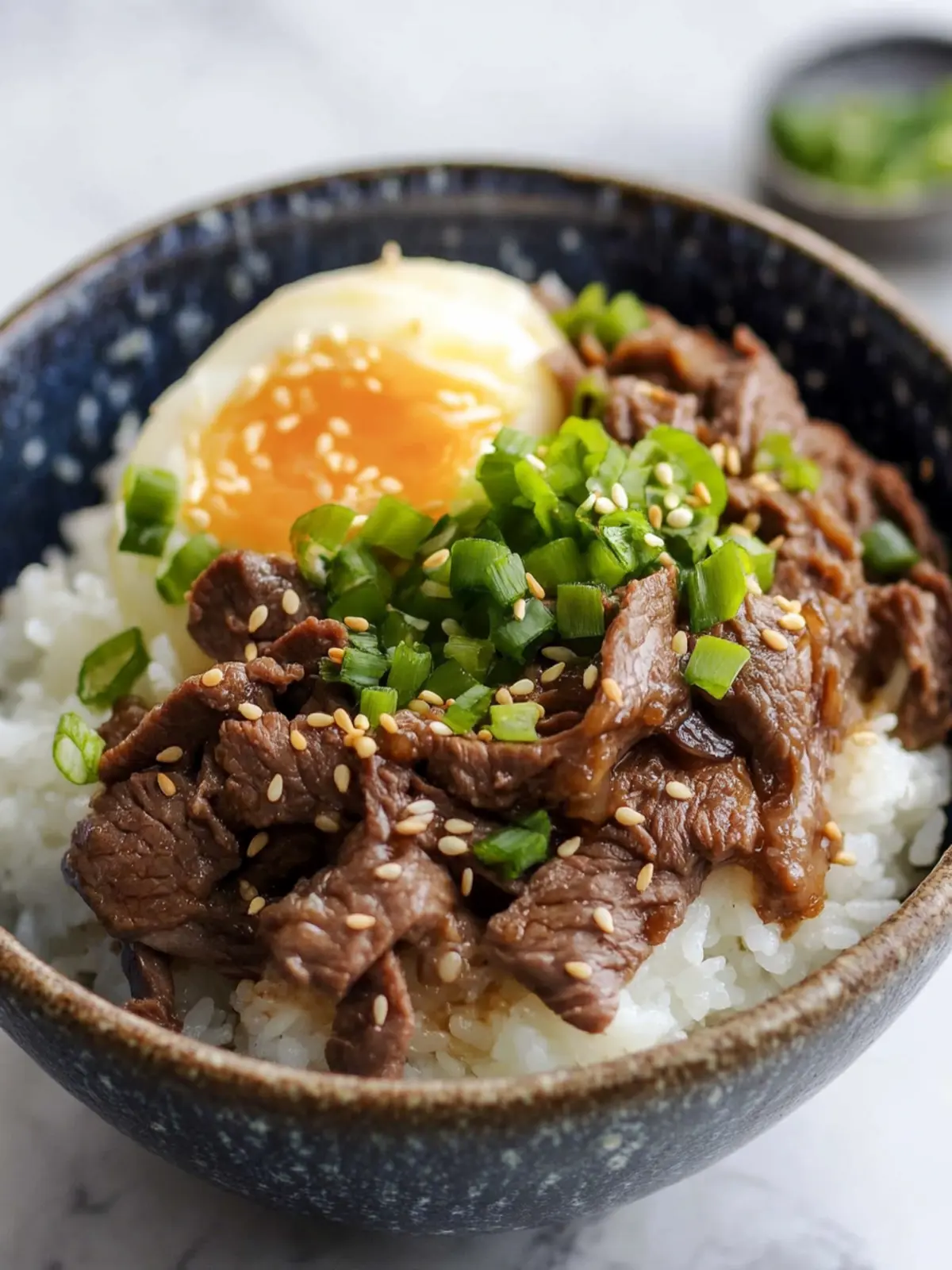
What to Serve with Japanese Beef Rice Bowl?
Enhance your dining experience by pairing the vibrant flavors of this delicious rice bowl with complementary sides and drinks.
-
Steamed Broccoli: A light and crunchy side that adds a fresh texture while balancing the savory richness of the beef.
-
Miso Soup: The umami flavors of this traditional Japanese soup deepen the meal experience and provide a comforting warmth.
-
Cucumber Salad: A simple salad with a tangy dressing offers a refreshing contrast, cutting through the richness of the beef.
-
Edamame: These lightly salted, vibrant green beans provide a fun, pop-n-crunch experience that pairs beautifully with the rice bowl.
-
Shredded Carrot Slaw: The crisp, sweet notes of carrot slaw add color and a delightful crunch that lightens up the rich dish.
-
Sake or Japanese Beer: Enjoy a glass of chilled sake or a crisp Japanese beer to enhance your meal’s flavors, offering a touch of authenticity.
-
Matcha Green Tea: A calming drink that balances the heartiness of the beef rice bowl, while the earthy flavors enhance the overall meal experience.
-
Coconut Sorbet: For dessert, this refreshing treat can cleanse the palate, providing a sweet finish to your savory journey.
Storage Tips for Japanese Beef Rice Bowl
Room Temperature: Enjoy your Japanese Beef Rice Bowl fresh for the best flavor. If left out, consume it within 2 hours to ensure food safety.
Fridge: Store any leftovers in an airtight container for up to 3 days. Reheat gently on the stovetop or microwave for a quick meal.
Freezer: For longer storage, the beef portion can be frozen for up to 2 months. Thaw in the fridge overnight before reheating and serving over fresh rice.
Reheating: Add a splash of water or broth while reheating to keep the beef and rice moist and delicious.
Japanese Beef Rice Bowl Swaps
Feel free to make this Japanese Beef Rice Bowl your own with these delightful variations and substitutions!
-
Gluten-Free: Use tamari sauce instead of regular soy sauce to enjoy this dish without gluten.
-
Vegetarian: Swap out the rib eye beef for sautéed mushrooms or tofu to create a hearty veggie version that’s still satisfying.
-
Spicy Kick: Add a teaspoon of chili garlic sauce to the broth for a delicious heat that enhances the flavors beautifully.
-
Coconut Kick: Replace the water with coconut milk in the broth for a creamy, tropical twist that adds richness and depth.
-
Brown Sugar: Substitute white sugar with brown sugar for a deeper, caramelized sweetness that balances the savory elements.
-
Vegan: Use vegetable broth and replace the egg with avocado slices for a creamy yet vegan twist to this classic dish.
-
More Veggies: Add in bell peppers, carrots, or bok choy when cooking the onions for added texture and nutrition.
-
Extra Umami: Toss in a spoonful of miso paste to the broth for an amplified umami experience that takes this bowl to another level.
Each of these variations offers a new and exciting way to savor your Japanese Beef Rice Bowl while staying true to its comforting essence. Happy cooking!
Make Ahead Options
These Japanese Beef Rice Bowls are perfect for meal prep! You can slice the rib eye beef and julienne the onion up to 24 hours in advance. Store these components in separate airtight containers in the refrigerator to keep them fresh and prevent the beef from browning. Additionally, you can prepare the savory broth (mixing water, hondashi powder, mirin, soy sauce, cooking sake, sugar, minced garlic, and ginger) up to 3 days ahead. When you’re ready to enjoy your meal, simply cook the beef and onions, pour the broth over them, and let them simmer for a few minutes until heated through. This way, you’ll have a delicious, homemade Japanese Beef Rice Bowl ready in no time, perfect for busy weeknights!
Expert Tips for Japanese Beef Rice Bowl
-
Slice Thinly: Ensure your rib eye is sliced thinly against the grain for maximum tenderness and flavor absorption.
-
Sauté Onions Freely: Don’t rush the onions; sauté them until they’re caramelized for a sweeter profile that balances the beef.
-
Simmer Just Right: Let the broth simmer long enough to meld the flavors, but avoid overcooking the beef to retain its juiciness.
-
Rice Choice Matters: Opt for short grain rice for that perfect stickiness, which holds onto the delicious broth and makes each bite satisfying.
-
Customize Garnishes: Feel free to mix and match garnishes like green onions and pickled ginger; they elevate your Japanese Beef Rice Bowl with fresh, zesty notes.
-
Watch Salt Levels: Use low-sodium soy sauce if you’re watching your salt intake, ensuring you still get the savory goodness without overpowering the dish.
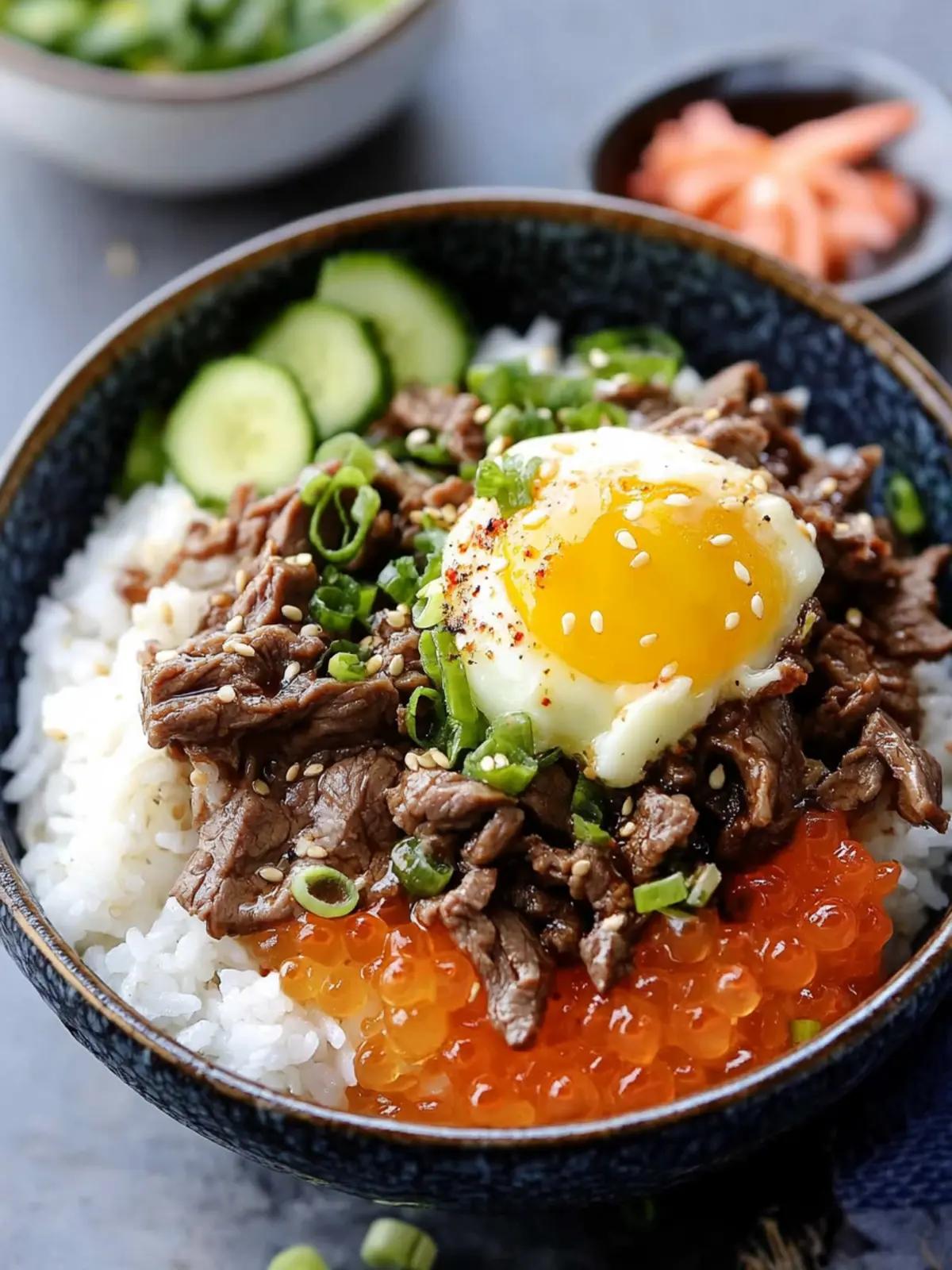
Japanese Beef Rice Bowl Recipe FAQs
How do I choose the best rib eye beef for this recipe?
Absolutely! When selecting rib eye beef, look for cuts with fine marbling. This fat interspersed within the muscle will melt during cooking, creating a luscious, juicy texture. Choose cuts with a bright red color and avoid those with dark spots or a dull appearance. If possible, consider asking your butcher for freshly cut thin slices, as this ensures tenderness.
How should I store leftovers of the Japanese Beef Rice Bowl?
Store any leftovers in an airtight container in the refrigerator for up to 3 days. Make sure to cool the food to room temperature before sealing it. For reheating, add a splash of water or broth in the microwave or stovetop to keep the beef and rice moist. It’s a quick and easy way to enjoy your tasty creation over again!
Can I freeze the beef mixture from the Japanese Beef Rice Bowl?
Very much! To freeze, let the beef mixture cool completely, then transfer it to a freezer-safe container or zip-top bag, removing as much air as possible. It can be stored in the freezer for up to 2 months. To reheat, simply thaw overnight in the fridge, and then warm it gently on the stovetop, adding a splash of water or broth to revive the flavors.
What if my beef turns out tough after cooking?
No worries! If your beef is tough, it might be due to slicing against the grain or cooking for too long. To fix this, slice the beef thinly against the grain before cooking, and keep an eye on cooking time—aim for about 5 minutes until just browned! If it’s already cooked, consider using it in a soup or stir-fry for a different dish where tenderness isn’t as crucial.
Are there any dietary considerations I should keep in mind for this dish?
Definitely! This Japanese Beef Rice Bowl can be made gluten-free by substituting tamari or coconut aminos for the soy sauce. For those with egg allergies, simply skip the onsen tamagos or poached eggs. As for pets, avoid sharing cooked onions or excessive garlic with dogs, as they can be harmful to them. Always check ingredient labels if you’re cooking for someone with food allergies.
What kind of rice is best for the Japanese Beef Rice Bowl?
I often recommend using short-grain rice, as it provides the ideal sticky texture, allowing the beef and broth to cling to each bite. If you prefer a lighter option, jasmine rice works well too, but be sure it’s cooked properly to maintain its fluffy and fluffy consistency.
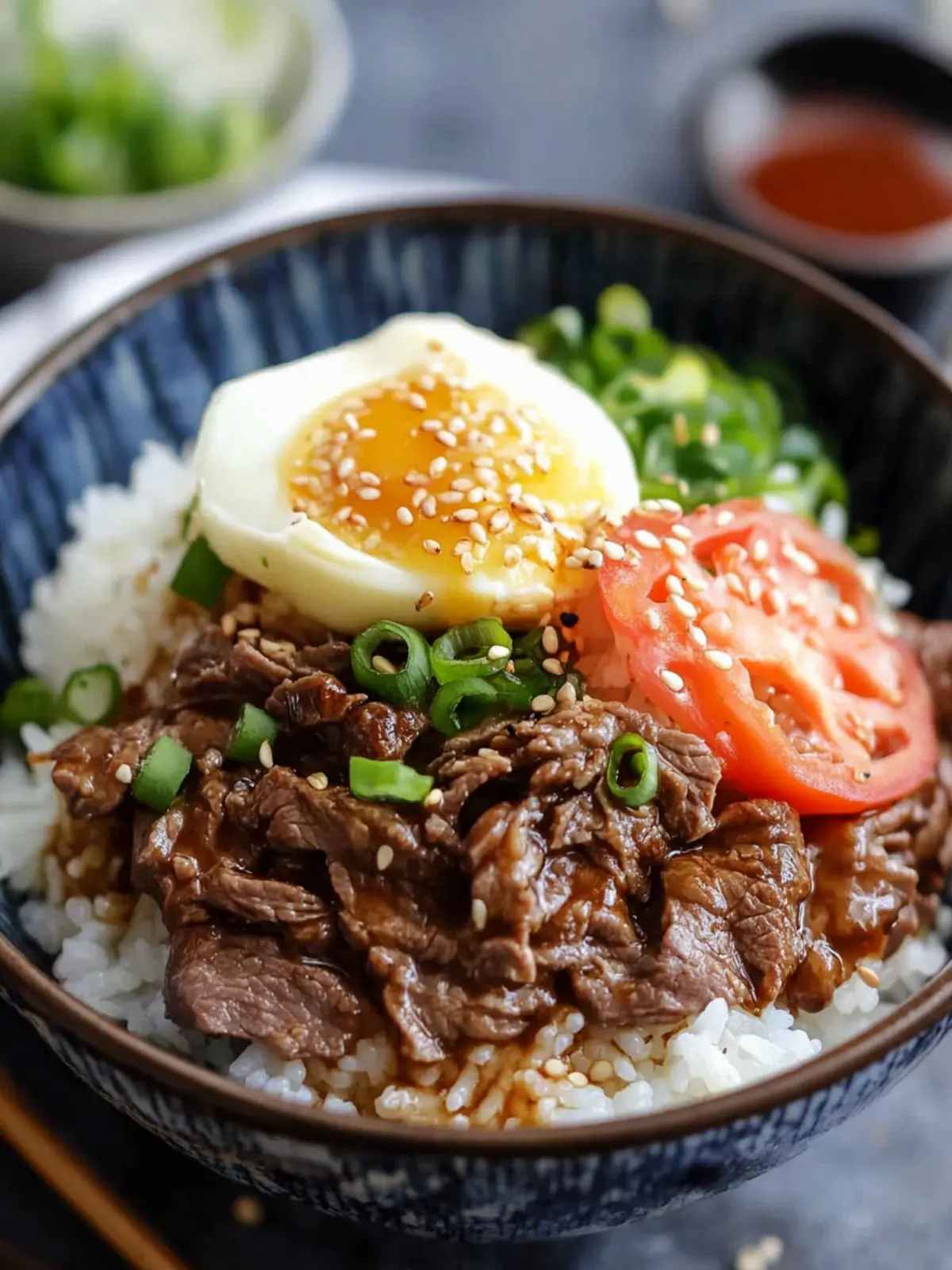
Savory Japanese Beef Rice Bowl That'll Wow Your Taste Buds
Ingredients
Equipment
Method
- Prepare the beef by ensuring it’s fully thawed and thinly sliced.
- Sauté the sliced onions in a skillet over medium heat until translucent, about 3-4 minutes.
- Add the rib eye beef to the skillet and cook until browned, about 5 minutes.
- Mix water, hondashi powder, mirin, soy sauce, cooking sake, sugar, minced garlic, and ginger in a separate bowl.
- Pour the broth over the beef and onions, and simmer for 5-7 minutes.
- Serve the beef mixture over cooked rice.
- Garnish with green onions, sesame seeds, pickled ginger, and onsen tamagos.