
As the leaves turn golden and the air gets crisper, my thoughts drift to the delightful flavors of fall, and one of my favorites is the exquisite taste of persimmons. You might be surprised to learn just how versatile this lovely fruit can be! The other day, while exploring my local farmer’s market, I came across a beautiful stash of ripe persimmons. Inspired by their natural sweetness, I whipped up this Persimmon Pulp Cake that’s quickly become a beloved staple in my home.
This cake is not just easy to make; it’s packed with warm spices, chewy raisins, and crunchy walnuts, all enveloped in the moist goodness of persimmon pulp. Perfect for sharing with friends or enjoying with a cup of tea, it turns an ordinary afternoon into a special occasion. Whether you’re a seasoned chef or someone looking to bring some happiness to your kitchen, this recipe promises to deliver a burst of flavor that promises to impress. Let’s dive in and discover how to create this beautiful fall treat!

Why is Persimmon Bread so special?
Unique flavor profile: The natural sweetness of persimmons shines through, making each bite a delicious experience.
Moist texture: This cake stays delectably moist thanks to the pulpy goodness of persimmons.
Spiced with warmth: Ground cinnamon and walnuts elevate the flavor, creating a cozy, comforting dish.
Simple to prepare: With straightforward steps, even novice bakers can whip this up effortlessly.
Perfect for gatherings: Impress your guests with a homemade treat that sparks conversation and joy!
For more delightful autumn recipes, be sure to explore my collection of seasonal favorites.
Persimmon Bread Ingredients
Dive into the delightful world of flavors with this easy-to-follow ingredient list.
For the Batter
• 2 large eggs – Essential for binding the ingredients and providing moisture.
• 1 ½ cups all-purpose flour – Creates the cake’s structure; consider whole wheat for added nutrients.
• ¾ cup white sugar – Sweetens the cake beautifully; swap with brown sugar for a richer flavor.
• ½ teaspoon salt – Balances the sweetness and enhances overall flavor.
• ½ cup vegetable oil – Keeps the cake moist; can be replaced with applesauce for a lighter option.
• 1 teaspoon ground cinnamon – Adds warmth and spice; try nutmeg for a different twist.
• 1 cup persimmon pulp – This star ingredient ensures a moist cake; substitute with applesauce in a pinch.
• ½ cup chopped walnuts – Adds a delightful crunch; pecans or almonds can work well too.
• 1 teaspoon baking soda – Helps the cake rise and become fluffy.
• ½ cup raisins – Brings in natural sweetness and chewiness; cranberries can be a tart alternative.
Feel the excitement build as you gather these ingredients, and get ready to create a stunning Persimmon Bread that is sure to impress!
How to Make Persimmon Bread
- Preheat the oven to 350°F (175°C) and prepare a baking pan by greasing it lightly. This ensures your cake comes out easily after baking!
- Mix together the eggs, sugar, and vegetable oil in a bowl until well combined and slightly frothy. This will create a lovely base for your batter!
- Combine flour, salt, cinnamon, and baking soda in another bowl. Whisk these dry ingredients together to incorporate air and enhance the cake’s texture.
- Gradually add the dry ingredients to the wet mixture, stirring gently until just combined. Be careful not to over-mix; we want a tender cake!
- Fold in the persimmon pulp, chopped walnuts, and raisins, ensuring everything is evenly distributed throughout the batter. The colorful mix adds to the visual appeal!
- Pour the batter into the prepared baking pan and spread it evenly. This will help it rise uniformly while baking.
- Bake for about 40-45 minutes, or until a toothpick inserted in the center comes out clean. You’ll know it’s done when the cake is golden brown and fragrant!
Optional: Serve warm with a dusting of powdered sugar on top for a sweet finish.
Exact quantities are listed in the recipe card below.

Persimmon Bread Variations & Substitutions
Feel free to let your creativity shine while making this delightful cake, enhancing flavors and catering to your personal taste!
- Gluten-Free: Use a 1:1 gluten-free flour blend for an equally delicious texture, perfect for gluten-sensitive friends.
- Nut-Free: Omit walnuts and replace them with extra raisins or sunflower seeds for added crunch without the nuts.
- Vegan: Substitute eggs with flaxseed meal mixed with water and use non-dairy milk instead of vegetable oil for a plant-based version.
- Spiced Up: Enhance the flavor profile by adding a pinch of nutmeg or ginger; it’ll give your cake an exciting twist!
- Fruity Surprise: Fold in chopped apples or fresh cranberries to add a fruity brightness and additional moisture to your cake.
- Chocolate Lover’s Delight: Stir in a handful of chocolate chips for a rich, delightful contrast to the persimmon pulp.
- Citrus Zest: Add the zest of an orange or lemon to the batter for a fresh, zesty brightness that complements the sweetness.
- Savory Touch: Infuse the batter with a bit of finely chopped rosemary or thyme for a surprising, aromatic flavor experience.
Explore these variations to find your perfect combination, and let the warmth of homemade goodness fill your kitchen!
Make Ahead Options
These Persimmon Bread preparations are perfect for busy home cooks looking to save time! You can mix the dry ingredients (flour, salt, cinnamon, and baking soda) and store them in an airtight container for up to 3 days. Additionally, you can prepare the persimmon pulp and refrigerate it for up to 24 hours before using it in your cake. When you’re ready to bake, simply whisk the eggs and sugar, combine with the prepped dry ingredients, and fold in the walnuts and raisins. This way, you’ll have a delightful homemade Persimmon Bread to enjoy with minimal effort, just as delicious as if you had made it fresh all at once!
Expert Tips for Persimmon Bread
- Use Ripe Persimmons: Choose soft, sweet persimmons for the best flavor. Hard persimmons won’t provide the desired moisture and sweetness.
- Don’t Over-Mix: Mix until just combined to keep your persimmon bread tender. Over-mixing encourages gluten development, leading to a dense texture.
- Experiment with Nuts: Feel free to swap walnuts for pecans or almonds. Each nut offers a unique taste, enhancing your cake’s flavor profile.
- Watch Your Bake Time: Ovens can vary; start checking around the 30-minute mark to avoid overbaking and keep the cake moist.
- Cool Before Slicing: Let the cake cool in the pan for at least 10 minutes, then transfer to a wire rack. This prevents sogginess and allows for clean slices!
What to Serve with Persimmon Bread?
As the aroma of your freshly baked cake fills the kitchen, it’s time to think about what delightful pairings can elevate your experience even further.
-
Spiced Tea: A warm, aromatic cup of spiced tea complements the flavors in the persimmon bread beautifully, offering a cozy afternoon treat.
-
Cream Cheese Frosting: This rich, creamy topping adds a tangy sweetness that enhances the natural flavors of the bread while providing a luscious texture.
-
Fresh Apples: Slices of crisp, tart apples contrast perfectly with the rich sweetness of the bread, creating a refreshing bite with each mouthful.
-
Honey Drizzle: A gentle drizzle of honey brings an extra touch of sweetness, emphasizing the cake’s flavors and making it feel special.
-
Vanilla Ice Cream: Scoop some creamy vanilla ice cream atop a warm slice for a delightful dessert that melts into the moist persimmon bread, creating a heavenly combination.
-
Chai-Spiced Nuts: Roasted nuts infused with chai spices add a crunchy element and can be a wonderful snack alongside your cake for perfect texture contrast.
-
Cinnamon Coffee: A steaming cup of cinnamon coffee not only warms you up but also echoes the delicate spices in the persimmon bread, making each sip a joy.
Imagine enjoying your persimmon bread on a chilly day, surrounded by the warmth of loved ones and these delightful accompaniments.
How to Store and Freeze Persimmon Bread
Room Temperature: Keep your persimmon bread covered at room temperature for up to 3 days. A cake dome or plastic wrap works well to retain moisture.
Fridge: If you need to store it longer, refrigerate the bread for up to a week. Wrap it tightly in plastic wrap to prevent drying out in the fridge.
Freezer: To freeze, slice the persimmon bread and wrap individual pieces in plastic wrap, then place them in an airtight container or freezer bag. It can last up to 3 months.
Reheating: To enjoy, simply thaw at room temperature or pop slices in the microwave for about 15-20 seconds. Enjoy the warm, comforting flavors!

Persimmon Bread Recipe FAQs
How do I select ripe persimmons for the best flavor?
Absolutely! When selecting persimmons, look for ones that are slightly soft, indicating ripeness. They should be a vibrant orange hue without dark spots or wrinkles. The best varieties for baking are the Hachiya persimmons, which become wonderfully sweet when fully ripened.
How should I store persimmon bread to keep it fresh?
For ideal storage, keep your persimmon bread covered at room temperature for up to 3 days. I recommend using a cake dome or wrapping it in plastic wrap to retain moisture. If you’re looking to store it for a longer period, wrapping it tightly and refrigerating will keep it fresh for up to a week!
Can I freeze persimmon bread? How do I do it?
Yes, you can definitely freeze persimmon bread! To freeze effectively, slice the bread and wrap each piece individually in plastic wrap. Then, place them in an airtight container or a freezer bag. It can stay delicious in the freezer for up to 3 months. When you’re ready to enjoy it, simply thaw at room temperature or microwave individual slices for about 15-20 seconds until warm.
What should I do if my persimmon bread turns out too dense?
Very good question! If your bread turns out dense, it might be due to over-mixing the batter. Remember to mix until just combined and avoid incorporating too much air. Additionally, ensure your baking soda is fresh, as this helps your bread rise properly. If you choose to include nuts or raisins, be cautious not to overload, as they can weigh the bread down.
Are there any dietary considerations for this recipe?
Certainly! This persimmon bread contains eggs and nuts (walnuts), which may pose allergy concerns. For egg substitutes, consider using flaxseed meal or applesauce for a vegan version. If nut allergies are a concern, you can skip the walnuts or replace them with pumpkin seeds for crunch. Pets should not eat persimmons, so keep this sweet treat for human enjoyment only!
How can I elevate my persimmon bread with other ingredients?
The more the merrier! You might consider adding spices like nutmeg or ginger for extra warmth. Dried cranberries can also replace raisins for a tart twist, while adding a splash of vanilla extract will deepen the flavor profile nicely. Happy baking!
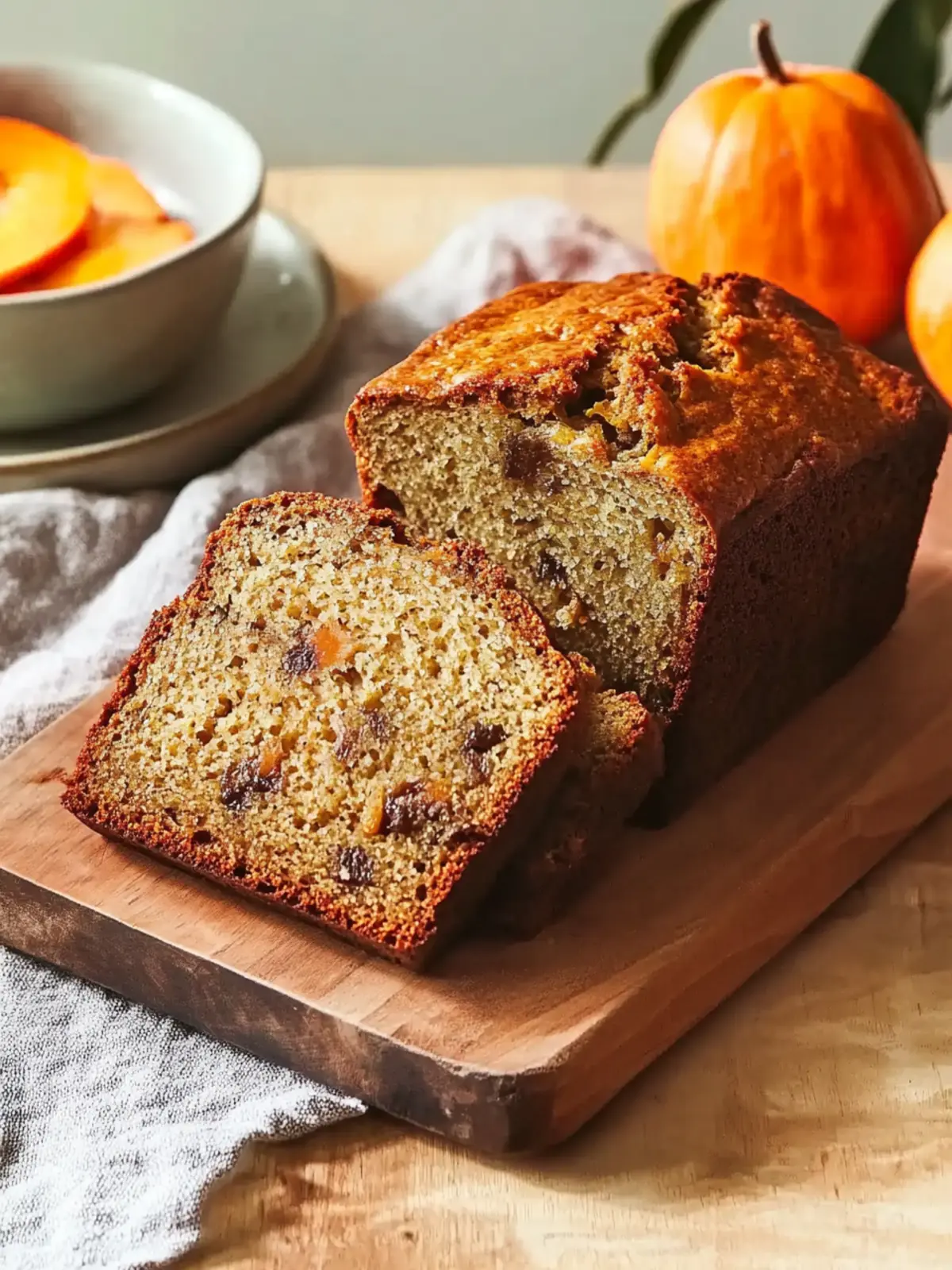
Deliciously Moist Persimmon Bread to Impress Your Guests
Ingredients
Equipment
Method
- Preheat the oven to 350°F (175°C) and prepare a baking pan by greasing it lightly.
- Mix together the eggs, sugar, and vegetable oil in a bowl until well combined and slightly frothy.
- Combine flour, salt, cinnamon, and baking soda in another bowl.
- Gradually add the dry ingredients to the wet mixture, stirring gently until just combined.
- Fold in the persimmon pulp, chopped walnuts, and raisins.
- Pour the batter into the prepared baking pan and spread it evenly.
- Bake for about 40-45 minutes, or until a toothpick inserted in the center comes out clean.